
Structural Drying for Kingwood Homeowners and Businesses
Kingwood sits in northeast Harris County where rainfall totals, bayou flooding, and Gulf Coast humidity create some of the most challenging moisture conditions in Texas. When water gets into the structure of a home or commercial building here, it does not dry on its own. Wet framing, saturated drywall, and soaked subfloors hold moisture for weeks without intervention, creating the ideal conditions for mold and wood rot.
Rhino Water Damage Restoration provides professional structural drying across Kingwood and surrounding neighborhoods including Kings Forest, Hunters Ridge, and Elm Grove. Our IICRC-certified technicians use commercial-grade equipment to pull moisture out of building materials quickly and completely, and we document everything for your insurance claim. If your home or business has taken on water, the clock is already running.
What’s Included in Our Structural Drying Services
When you hire Rhino Water Damage Restoration for structural drying in Kingwood, you get a complete moisture management process, not just fans placed in a room. Every project is scoped to the specific materials and conditions present in your building.
Thermal Imaging and Moisture Mapping
Before any equipment goes in, our technicians scan your property with thermal imaging cameras and moisture meters to locate water hidden inside walls, under flooring, and inside ceiling cavities. Kingwood homes often have water travel far from the original entry point due to the way modern construction channels moisture through wall framing. Mapping this accurately prevents us from missing pockets that would later feed mold growth.
Commercial Drying Equipment Calibrated for Kingwood’s Climate
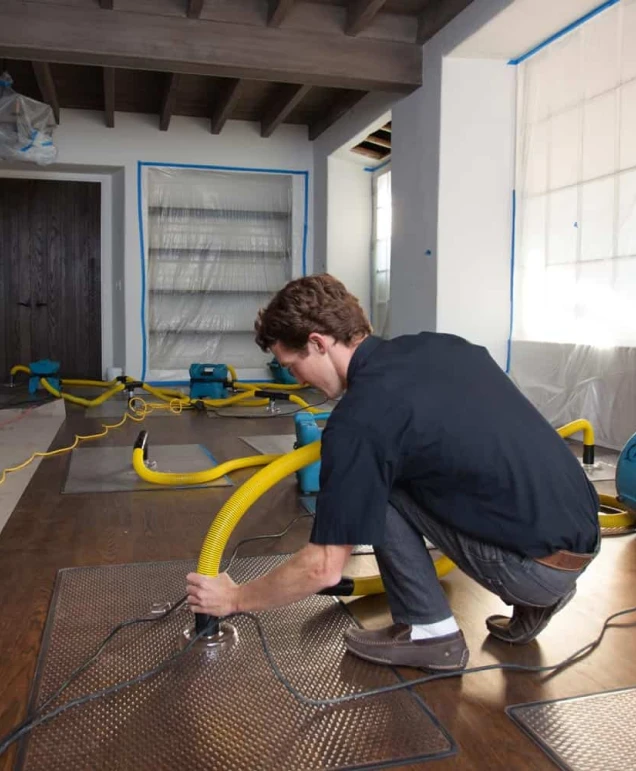
We deploy industrial air movers, high-capacity dehumidifiers, and desiccant systems sized specifically for your affected area. Standard box fans sold at hardware stores cannot achieve the air exchange rates needed to dry structural materials, especially in Kingwood’s high-humidity environment. Our equipment is the same class used by large-scale disaster recovery operations, and it gets the job done in days rather than weeks.
Daily Monitoring and Drying Documentation
A technician checks and logs moisture readings every day until your structure reaches the drying goal. These logs are formatted for insurance adjuster review and serve as proof that remediation was completed to industry standards. You will receive a final drying report at project completion that you can submit directly with your insurance claims assistance file.
Contact Rhino Water Damage Restoration today to get drying equipment in place before hidden moisture causes secondary damage.
When Do Kingwood Properties Need Structural Drying?
Not every water event in Kingwood looks like a dramatic flood. Many of the moisture problems our crews respond to started small and went unnoticed for days. Knowing when to call a drying professional can save Kingwood homeowners thousands of dollars in mold remediation and structural repair costs.
After Storm Flooding or Bayou Overflow
Kingwood experienced significant flooding during major storm events, and the area’s proximity to the West Fork San Jacinto River means rising water is a recurring risk. Even a few inches of floodwater can saturate wall cavities, insulation, and floor systems well above the visible waterline. Storm flooding almost always requires professional drying because the affected area extends far beyond what the eye can see.
Hidden Pipe Leaks in Older Kingwood Homes
Many homes in established Kingwood subdivisions were built in the 1970s through 1990s and have older plumbing systems prone to slow leaks inside walls. A pinhole leak behind a bathroom wall or under a kitchen sink can saturate framing and subfloors for months before visible staining or swelling alerts the homeowner. By the time you notice discoloration or soft spots, the moisture has usually spread into adjacent cavities and structural members. If you also need mold remediation, we handle that as well.
Following Any Water Damage or Sewage Backup
Any event that introduces water or moisture into your building structure, including appliance failures, roof leaks, and sewage backup cleanup, can leave materials saturated enough to require professional drying. Homeowners sometimes assume that wiping up visible water is sufficient, but structural materials absorb and hold far more moisture than surfaces suggest. Calling for a moisture assessment after any water event in Kingwood is the responsible step, even if things appear dry on the surface.
Acting quickly after water intrusion is always less expensive than addressing the mold, rot, and structural damage that follows weeks of unresolved moisture.
Our Structural Drying Process for Kingwood Properties
Schedule Your Emergency Assessment
Call Rhino Water Damage Restoration any time and we will get a certified technician to your Kingwood property the same day. During that first call, we gather basic information about the water source and the areas you can see are affected. Arriving informed means our crew can begin the moisture mapping process immediately without delay.
Inspect and Map All Affected Areas
Our technician walks the entire affected area with thermal imaging and calibrated moisture meters, not just the obvious wet spots. Water in Kingwood homes frequently travels through wall cavities and under flooring before pooling in unexpected locations. This detailed assessment ensures no hidden moisture is left behind to cause problems after the project is complete.
Deploy Equipment and Execute the Drying Plan
We position industrial air movers and dehumidifiers based on the moisture map and begin the drying process. Equipment is adjusted daily as materials respond, and we use negative air pressure techniques in areas where contamination is a concern. For properties that also need emergency water damage restoration beyond drying, our crews can coordinate all scopes of work together.
Confirm Dry Standards and Close Out the Project
Once all monitored areas reach IICRC target moisture levels, we conduct a final scan of the entire structure to confirm no wet pockets remain. You receive a complete drying report with all daily moisture logs included. That documentation is yours to keep and submit to your insurance carrier to support your claim.