
Structural Drying for Energy Corridor Houston Homes and Businesses
Water damage does not stop at the surface. When moisture works its way into wall cavities, subfloors, and framing, the clock starts ticking on mold growth, wood rot, and weakened structural integrity. Energy Corridor Houston properties face this risk year-round, but especially during hurricane season and the heavy spring rain events that push water through foundations and exterior walls.
Rhino Water Damage Restoration provides professional structural drying for residential and commercial properties throughout Energy Corridor Houston. Our IICRC-certified technicians use industrial air movers, desiccant dehumidifiers, and thermal imaging equipment to locate and eliminate moisture that standard fans and household dehumidifiers simply cannot reach. We serve the entire Energy Corridor, including properties along Interstate 10, Eldridge Parkway, and the commercial districts near Barker Cypress Road.
What’s Included in Our Structural Drying Services
Hiring Rhino Water Damage Restoration for structural drying means getting a full-scope moisture mitigation service, not just equipment drop-off. Every job includes initial moisture mapping, daily monitoring, written drying logs, and a final clearance reading before we remove any equipment.
Thermal Imaging and Moisture Mapping
Before we place a single piece of equipment, our technicians scan every affected surface using thermal imaging cameras and calibrated moisture meters. This gives us an accurate picture of where moisture has traveled, including inside walls and under flooring where it is not visible. In Energy Corridor Houston’s older commercial buildings and townhomes, moisture migration paths can be surprisingly extensive.
Industrial Drying Equipment Placement
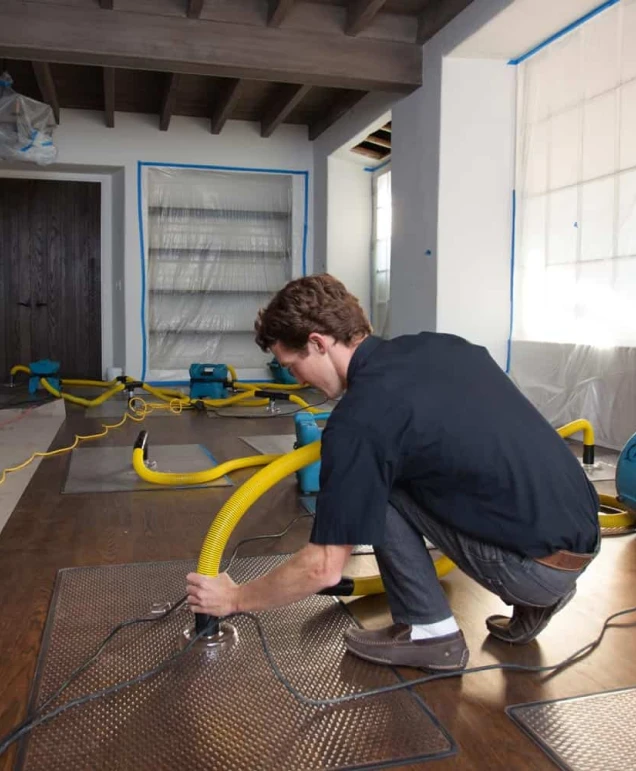
We use commercial-grade air movers and low-grain refrigerant dehumidifiers rated for the square footage of each specific job. For walls and cavities, we deploy injectidry systems that force warm, dry air directly into framing and insulation bays. This targeted approach dramatically reduces drying time compared to open-air methods and protects building materials that would otherwise need to be torn out and replaced. You can also learn more about how we handle related services like mold remediation and crawl space encapsulation if moisture has spread further into your property.
Daily Monitoring and Documentation
A technician visits your property every day during the drying process to record moisture readings, adjust equipment positioning, and update the drying log. This documentation is critical for insurance claims and proves to your adjuster that the work was performed to IICRC S500 standards. We do not pull equipment until every material has reached its dry standard target, which matters significantly in Energy Corridor Houston’s high-humidity environment.
If you are dealing with water damage right now, contact Rhino Water Damage Restoration for an immediate assessment.
When Do You Need Structural Drying in Energy Corridor Houston?
Not every water incident requires professional structural drying, but more situations call for it than most property owners realize. Energy Corridor Houston’s climate, building stock, and aging infrastructure create specific conditions that make moisture intrusion a frequent problem in this part of Harris County.
After Storm Flooding or Hurricane Damage
Tropical storms and hurricanes routinely bring significant rainfall to the Energy Corridor area, and the flat terrain along Buffalo Bayou’s tributaries makes flooding a real risk even for properties that have never flooded before. When stormwater enters a structure, it soaks into drywall, insulation, and wood framing within hours. Without professional structural drying, that moisture will feed mold colonies and weaken the structural integrity of walls and floors over time.
Burst Pipes and Plumbing Failures
The older townhomes and mid-rise condominiums common in parts of Energy Corridor Houston are more prone to pipe failures, particularly during the occasional hard freezes that hit the Houston area in winter. A burst pipe inside a wall can saturate framing and insulation before the leak is even noticed. By the time visible water damage appears on drywall or ceilings, moisture has often already spread several feet beyond the obvious damage area.
Appliance Leaks and HVAC Condensation
Refrigerator supply lines, dishwasher hoses, and water heater failures are among the most common causes of hidden structural moisture in Energy Corridor Houston homes. HVAC systems in Houston’s humid climate also produce significant condensation, and when drain lines clog or air handlers are improperly sealed, that moisture can drip steadily into ceiling cavities and wall systems. These slow leaks are particularly damaging because they often go undetected for weeks or months. You can also explore our emergency water damage restoration and flood cleanup services for situations involving larger water volumes.
If you have noticed soft spots in your flooring, musty odors, or visible water staining on walls or ceilings, do not wait to call a professional. The longer moisture sits inside structural materials, the more expensive and disruptive the repairs will become.
Our Structural Drying Process for Energy Corridor Houston Properties
Schedule Your Emergency Assessment
Call Rhino Water Damage Restoration any time and our team will dispatch a certified technician to your Energy Corridor Houston property, typically within 60 minutes for emergency calls. When you reach out, have the affected rooms and the likely source of water ready to describe so we can bring the right equipment on the first visit. Acting within the first few hours makes a significant difference in how much structural material can be saved.
Map Moisture Across All Affected Areas
Our technician performs a thorough moisture assessment using thermal cameras and penetrating moisture meters to identify every area where water has traveled inside your structure. We check behind baseboards, inside wall cavities, under flooring, and above ceiling tiles to build a complete moisture map. This assessment drives our equipment strategy and gives you a clear, documented picture of the full scope of damage for insurance purposes.
Deploy and Monitor Industrial Drying Systems
Based on the moisture map, we position air movers, dehumidifiers, and specialty drying systems at calculated intervals to move warm, dry air through every saturated material. Technicians return daily to record moisture meter readings, adjust equipment as drying progresses, and update the drying log. We treat Energy Corridor Houston’s humidity as part of our planning, not an afterthought, and we account for it in every equipment placement decision.
Confirm Dry Standards and Complete Final Clearance
Before we remove any equipment or close out your job, every structural material is tested against IICRC S500 dry standard targets for its material class. We provide you with a written final clearance report that includes all moisture readings taken throughout the drying process. This documentation protects you during the insurance claims process and gives you a clear record that the work was completed correctly.