
Structural Drying for Downtown Houston Properties After Water Damage
When water works its way into the bones of a building, the visible damage is only part of the problem. Walls, floor joists, concrete slabs, and insulation absorb moisture fast, and in Downtown Houston’s heat and humidity, that trapped water creates ideal conditions for mold and structural decay within days.
Rhino Water Damage Restoration provides professional structural drying for homes and commercial properties throughout Downtown Houston. Our IICRC-certified technicians use industrial drying systems and calibrated moisture meters to verify that every affected material reaches a safe moisture level before we close the job.
What’s Included in Our Structural Drying Service
Hiring Rhino Water Damage Restoration for structural drying means you get a complete, documented drying process backed by certified technicians and professional equipment. We handle everything from the initial moisture assessment through final verification, and we work directly with your insurance carrier throughout.
Thermal Imaging and Moisture Mapping
Before any equipment is placed, we conduct a full moisture assessment using thermal imaging cameras and professional-grade meters. This lets us see exactly where water has traveled inside your walls, subfloor, and ceiling without unnecessary demolition. The result is a precise drying plan built around your specific building layout.
Industrial Air Movers and Commercial Dehumidifiers
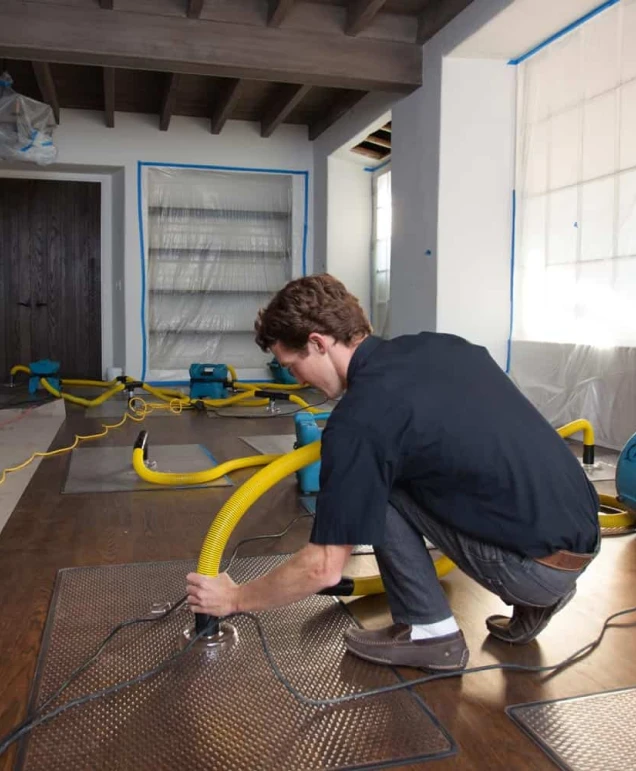
We deploy commercial air movers and low-grain refrigerant dehumidifiers sized for the volume of your affected space. In older Downtown Houston buildings with thick concrete walls or multi-layer flooring systems, we may also use desiccant dehumidifiers to handle materials that hold moisture longer. Equipment placement is adjusted daily based on recorded readings.
Daily Monitoring and Verified Moisture Clearance
Our technicians return each day to record moisture readings and confirm the drying is trending correctly. We do not pull equipment based on a calendar. Equipment comes out only when materials reach target moisture content verified by the meter. You receive a full drying log that can be submitted with your insurance claim or kept for your records.
If you have questions about what the process looks like for your specific property, contact our team for a no-pressure assessment.
When Do You Need Structural Drying in Downtown Houston?
Not every water event is obvious. Some of the worst moisture damage in Downtown Houston properties happens slowly, behind walls or under flooring, before any visible sign appears. Knowing when to call for professional help can prevent thousands of dollars in secondary damage.
After a Burst Pipe or Plumbing Failure
Older high-rise and mid-rise buildings throughout Downtown Houston often have aging plumbing that is susceptible to sudden failures. When a pipe bursts inside a wall cavity, water soaks into framing, drywall, and insulation before anyone notices. By the time a wet spot appears on your ceiling or floor, the moisture has already spread well beyond the visible area.
Following Street Flooding or Storm Surge
Downtown Houston sits in a flood-prone zone, and heavy rainfall events regularly push water into ground-floor commercial spaces, parking structures, and residential units. Water that enters through a slab or foundation wall is especially difficult to dry because it saturates concrete slowly and from below. Professional drying equipment is the only reliable way to pull that moisture back out before mold takes hold.
Roof Leaks in High-Rise and Mixed-Use Buildings
Flat and low-slope roofs are common on Downtown Houston’s commercial and mixed-use buildings, and they are prone to membrane failures after storms. A slow roof leak can saturate ceiling assemblies and interior wall cavities for weeks before the damage becomes visible. If you notice staining, soft spots, or a musty odor after rain, it is worth having moisture levels checked before the problem spreads further.
Acting quickly after any of these events dramatically reduces the cost of repairs and eliminates the risk of mold growth inside your structure.
Our Structural Drying Process for Downtown Houston Buildings
Schedule Your Emergency Assessment
Call Rhino Water Damage Restoration any time and we will get a certified technician to your Downtown Houston property as quickly as possible. We prioritize emergency dispatch for active water events so you are not waiting through a queue when time matters most. When you call, let us know the source of the water and what areas are affected so we can arrive with the right equipment.
Assess Your Building’s Moisture Saturation
Our technician walks the entire affected area with thermal imaging and moisture meters to create a complete picture of where water has traveled. This step is critical in multi-story buildings and properties with concrete construction, both common throughout Downtown Houston, because moisture migration in these structures is rarely contained to the obvious wet zone. The assessment forms the foundation of your drying plan and your insurance documentation.
Deploy Equipment and Execute the Drying Plan
We position air movers, dehumidifiers, and any specialty equipment based on the moisture map created during the assessment. Our team monitors progress daily, adjusts equipment placement as materials dry, and records readings at each visit. We also coordinate with your insurance claims assistance process throughout, providing the documentation your adjuster needs.
If we identify mold growth during the drying process, we connect you directly to our mold remediation team so both issues are addressed together without delays.
Verify Final Dryness and Complete Documentation
Before we remove any equipment, every monitored material must read at or below its target moisture content. We do a final walkthrough with you to review the readings and explain what was done. You receive a complete drying report that documents the before and after moisture levels, equipment used, and dates of service. For properties that experienced significant water intrusion, we may also recommend crawl space encapsulation or emergency water damage restoration follow-up to protect against future events.